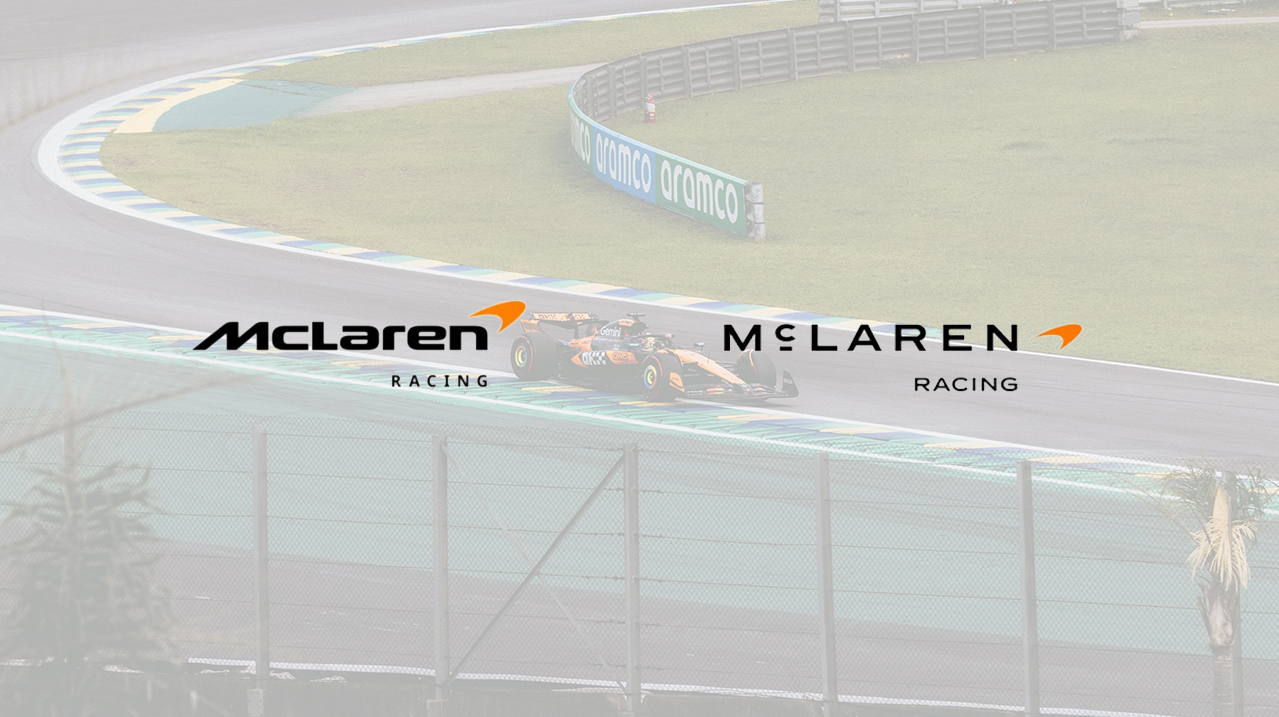
McLaren has unveiled an evolved brand identity for 2026, bringing McLaren Racing and McLaren Automotive together under a more connected visual system.
But what makes this rebrand interesting is not how much has changed.
It is where McLaren chose to look for its future: its beginning.
A New Logo With a Very Old Story
At the centre of the new identity is a redesigned McLaren wordmark.
Instead of creating something entirely new, McLaren looked back more than 60 years to a family service station in Remuera, Auckland.
The station belonged to Bruce McLaren’s parents, Les and Ruth McLaren. Long before McLaren became a global name in motorsport and automotive performance, the family name appeared above this small business in New Zealand.
It was also where a young Bruce McLaren worked on the car that would take him to his first racing victory.
Today, the lettering from that original sign has inspired McLaren’s new global wordmark.
That makes the rebrand feel like more than a visual redesign. It creates a direct connection between the McLaren we know today and the place where its story began.
Going Back to Move Forward
Rebranding often comes with the temptation to change everything.
A new logo. New colours. New typography. A new story.
But strong brands do not always need to reinvent themselves.
Sometimes, the better approach is to rediscover what made the brand meaningful in the first place.
McLaren has more than six decades of history to draw from. Rather than leaving that history behind, the new identity brings key parts of it forward.
The famous Speedmark remains. Papaya continues as a defining colour. The Speedy Kiwi still represents Bruce McLaren’s New Zealand heritage. Meanwhile, the wider color palette takes inspiration from important moments throughout McLaren’s history.
These elements are not there simply for nostalgia.
Together, they connect the McLaren of today with the people, ideas and ambitions that built the brand.
Heritage Should Be More Than Decoration
This is where the McLaren rebrand becomes particularly interesting from a branding perspective.
Heritage can easily become decoration.
Brands bring back an old logo for an anniversary. They use historic photographs in a campaign. Or they revive a vintage colour for a limited edition.
McLaren has gone further.
Instead of using its history for a temporary campaign, it has brought part of its origin story into its everyday identity.
The family name that once appeared above a small service station in New Zealand has now been reinterpreted as the wordmark representing McLaren around the world.
That creates a clear connection between Bruce McLaren the person, McLaren the racing team, McLaren the automotive brand and the McLaren of tomorrow.
A Rebrand Doesn’t Have to Leave the Past Behind
McLaren describes the evolved identity as connecting its past, present and future. And visually, that is exactly what makes the transformation compelling. (McLaren)
The identity feels contemporary without pretending the company was born yesterday.
For us at BEYOND 360, there is a broader branding lesson here.
Rebranding should not automatically mean leaving the old brand behind.
For brands with genuine history, the past can be one of their strongest strategic assets.
The challenge is knowing which parts of that history still carry meaning—and finding a way to make them relevant again.
McLaren’s new identity does exactly that.
It looks forward by returning to a family service station in Auckland, to a young Bruce McLaren working on his first racing car, and ultimately to the place where the McLaren story began.
Sometimes, moving a brand forward starts by remembering where it came from.